Antarctica Has a Sticker Price: Here’s How to Plan
Antarctica has a real sticker price, and most advice on how to plan a trip to Antarctica stops at “wait for a last-minute deal,” like that’s a strategy instead of a starting point. I spent three years inside that world before I booked, and last minute turned out to mean almost nothing like what I expected going in. Here’s the actual framework: how the deals work, when waiting pays off and when it costs you, and what changes depending on when you book.

How to Plan a Trip to Antarctica: The Decision That Comes First
How Long This Trip Takes, Door to Door
People tend to ask how long is an Antarctica cruise. The expedition itself, typically 10 to 12 days, is only part of the real timeline. Unless you live in South America, you’re likely looking at a minimum 13 hour travel day before you even reach the ship. Most people spend a few days exploring Buenos Aires, the most common layover hub, or tack on time in Patagonia, to make the long haul feel worth it. Plan for a 15 to 20 day trip once flights and stopovers are factored in, not just the 10 days on the ship, if your schedule allows.
Pick Your Operator Type First
Before any booking decision, you must decide what kind of Antarctica trip you’re in the market for. Do you want the opportunity to step off the ship onto the ice, or are you fine observing nature from the deck? Does it matter to you whether your expedition leader has done this for three years or thirty? That single decision, ship size, operator type, luxury level, determines how much last-minute flexibility you’ll have later, since some operators barely release cabins to deal agencies at all.
Last Minute Antarctica Cruise: Should You Wait or Book Now?
The biggest misconception about booking Antarctica is treating “last minute” as a deadline. It’s not. A last-minute deal doesn’t always mean the ship is leaving next week, though it could, and it doesn’t mean settling for whatever’s left. It comes down to how much unsold space an operator has and how badly they want to fill it, and that calculation runs from the day a sailing goes on sale until the day it departs.
I was on last-minute deal agency email lists for three years straight, constantly updating them on my budget, timeline, and which operators I’d consider. I watched deals come in for departures the next week and departures nearly a year out, with no pattern to predict either one. Booking last minute almost always beats the full sticker price, but it doesn’t mean a downgrade. This is also where the ship-type decision comes back into play. Every agency in this space works only with operators that land you on the ice, not the larger ships built to sail past it.
Worth Knowing
Last minute doesn’t necessarily mean the week before departure. Deals start landing as early as March or April for the season that starts the following November, and they keep coming all the way through it. If your dates are flexible, watch for Black Friday specifically. Agencies are clearing inventory across their whole season then, not just the next sailing, and that’s when some of the steepest discounts I tracked over three years showed up.
I spent three seasons hoping prices would come down, and they only climbed as Antarctica got more popular. Waiting longer doesn’t guarantee a better price. It just guarantees more anxiety about whether the right deal shows up at all. If I’d booked during year one or two instead of holding out, I likely would have saved a few thousand dollars just by being decisive sooner.
How a Last-Minute Deal Works
Choosing a Deal Agency
Once you know what kind of experience you want, and thus have an operator or two in mind, the next decision is which last-minute deal agency to work with, and that’s a different choice than picking the operator itself. These agencies don’t set prices. They get first call when an operator has unsold cabins, then pass the discount on to you.
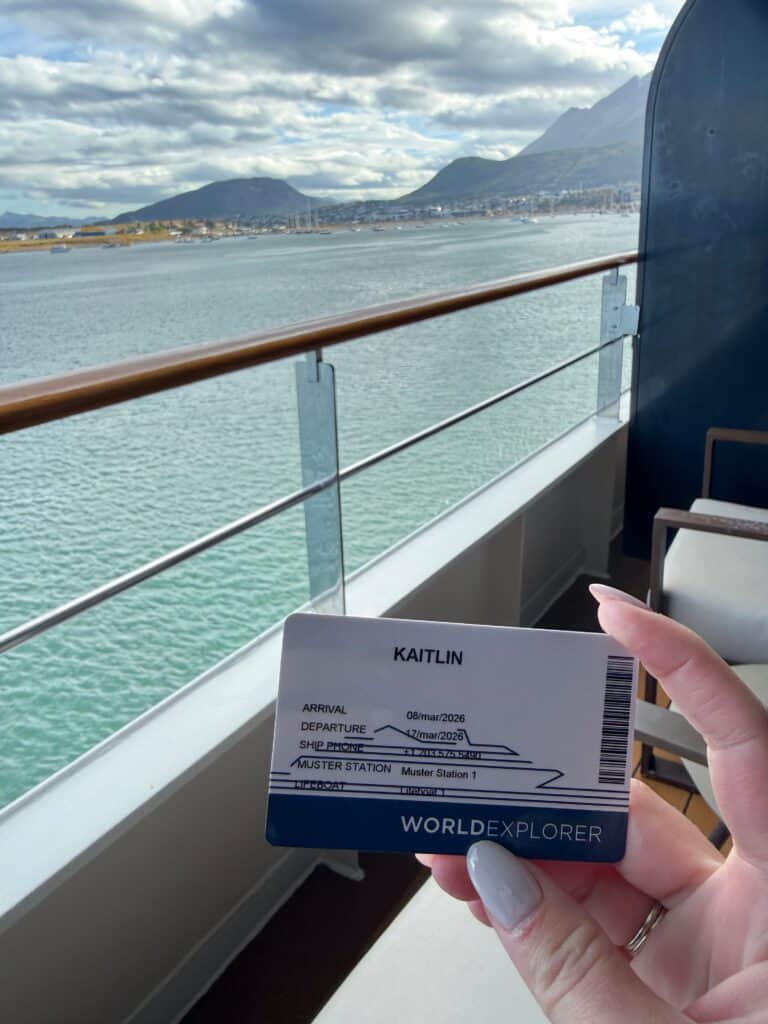
Two agencies lead this space out of Ushuaia, Wayfinders and Freestyle Adventure Travel. About half the last-minute bookings on our ship split between the two, which tells you how closely interchangeable they are. We went with Freestyle, mostly for responsiveness, and because after three years of them fielding my endless questions, it felt like the right place to put the business. Wayfinders would have served us just as well.
What Surprised Us About the Last-Minute Crowd
One of the most astonishing discoveries: every agency in this niche gets offered the same deals from the same operators. Choosing one over another comes down to their perks, not their prices. A free gear rental or a beanie won’t change the sticker price, but it changes how much you spend filling in the gaps yourself. It also means almost everyone who booked last minute compares notes onboard, and discovering we’d all paid close to the same price turned into a running joke on the ship.
The age range amazed us more than the price did. We were 28 and 31, expecting to be some of the youngest people who’d spent this kind of money, but the ship was full of people in their 30s who’d found the same deals we did.
Free gear rental is a common perk across these agencies, usually waterproof pants, beanies, gloves, sometimes scarves. It’s worth asking about upfront, since it offsets cost and frees up suitcase space. Bring your own waterproof gloves even if they’re included. Ours, provided by the agency, weren’t actually waterproof, and rental gear gets used hard across an entire season. We spent the whole trip with ice cold hands because of it.
Picking an Operator, and Moving Fast
Operator selection mattered more than agency selection in my case, though responsiveness from the agency was still important. Deals move fast, and not every agency is equally quick to match incoming inventory against what you’ve communicated you want. I turned down 50 or so expeditions across three seasons because I was specific about which few operators I’d want to book with.
In November 2025, a deal landed on my second-choice operator for a March sailing. I waited too long to confirm it, and it expired within days (as I quickly learned deals do), gone before I could pull the trigger. When a deal matches your non-negotiables, book it the same day, not days later. Three months later, in February, a deal landed on my first-choice operator instead. We booked it at 3am. My boyfriend was randomly checking his email (who does that at 3am?) when the deal came through, and he woke me up so excited he could barely get the words out. We’d lost something that felt just as perfect a few months earlier. This time we didn’t hesitate.
Ushuaia or Punta Arenas: Which Port Should You Book From?
We sailed both directions out of Ushuaia, and if we were rebooking today, we’d choose the same route. Most ships that cross the Drake both ways depart from there, while Punta Arenas tends to run the fly-one-way, sail-the-other version of the trip instead. Based on what I tracked over three seasons, roughly 80% of the last-minute deals I saw departed from Ushuaia, with the remaining 20% on Punta Arenas fly/sail routes. If you want the full Drake crossing rather than skipping half of it by air, that alone tips the decision toward Ushuaia.

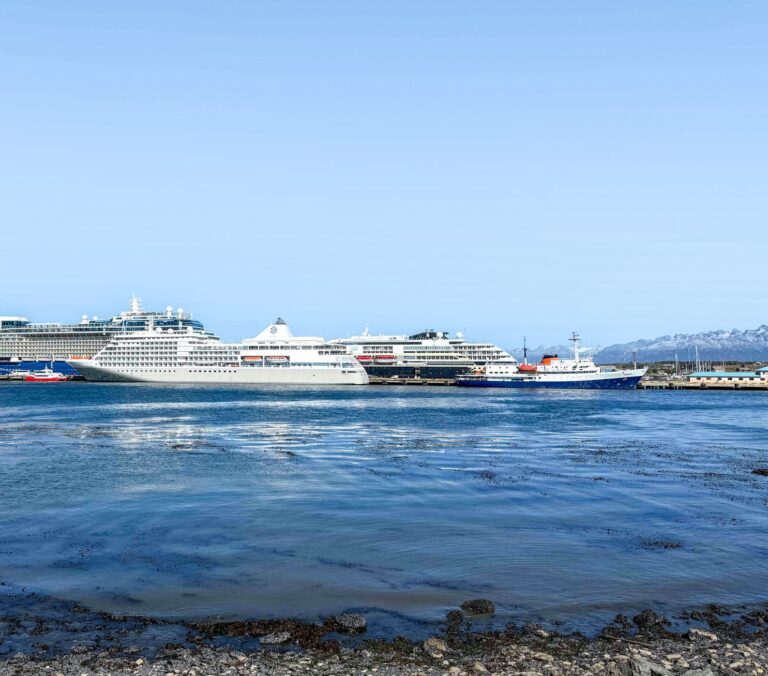
Almost every commercial operator sailing to Antarctica belongs to IAATO Tourism Overview, the organization that coordinates environmentally responsible tourism across the continent. That’s part of why the list of departure ports stays so short. Ushuaia and Punta Arenas aren’t the only options on a map, they’re just the two the entire industry has organized around.
What a Last-Minute Deal Can Cost
The Real Price Spread
A quick disclaimer before the numbers: these are estimates from my own research over the past few years, closest to the 2025-26 season specifically. If this trip is on your radar, get on these agencies’ email lists yourself and watch the real numbers come through for your dates.
Booking direct with an operator for a classic, no-frills expedition usually lands just under $10,000 USD. The same trip through a last-minute deal can run $5,000 to $7,000. Premium and luxury expeditions, or longer South Georgia and Falkland Islands itineraries, range much wider: $15,000 to $30,000+ direct, versus roughly $7,000 to $10,000 on a last-minute deal, with the occasional South Georgia deal landing closer to $13,000. Booking last minute can cut the cost by close to half. For the full itemized breakdown of what that money buys, read my post on our exact cost for our 10-day expedition, down to the dollar. This is the decision-level version here: the spread, not the line items.
Deposits and Cancellation Windows
This is where waiting costs you something concrete, not just anxiety, and it’s not something I had thought through until I started writing this post. As a general rule, last-minute deals come with less forgiving cancellation terms than booking direct, since most of that flexibility belongs to people who locked in their cabin months in advance. If you’re chasing a deal, the operators worth watching are the ones that consistently release cabins to agencies in the first place: Quark Expeditions, Atlas Ocean Voyages, Antarpply Expeditions, and Albatros Expeditions, among others.
Confirm the specific cancellation terms with your operator or deal agency before you pay anything, since policies vary and change without much notice. We paid $4,000 USD upfront and the remainder three days later, since we booked six weeks before departure and were well outside any cancellation window either way.
Travel Insurance Isn’t Optional
Every operator requires travel insurance with medical evacuation coverage before you board, because of how remote Antarctica is, and coverage minimums vary by operator. Some higher-end operators include medical evacuation as part of the package, which lowers what you need to buy separately
A Small Nod to Points and Miles
Most expedition lines won’t let you redeem points directly against the cruise fare, but points can still offset the cost when considering the door-to-door trip. We opened the American Express Business Platinum card specifically for this purchase and got back close to $4,000 USD in point value. Pairing a new card’s welcome bonus with the purchase, or using existing airline and hotel points for flights and pre/post stays, is where points move the needle, more than trying to redeem against the fare itself.
Skip the Suite
Most expedition ships are almost entirely balcony cabins, with only a handful of portholes or windows, and you’ll spend far less time in your room than you think. The best real estate on these ships is the observation deck, where everyone ends up watching for whales, icebergs, seals, and whatever other wildlife decides to make an appearance that day. A balcony only shows you half of what’s happening on one side of the ship.
Mistakes Worth Avoiding When You Book
We met a group on our ship who’d booked the exact same deal we did, for the exact same price, yet only four days before departure, not six weeks. They had no idea what they were getting into beyond “a trip to the white continent.” When deal-chasers onboard started comparing notes on how long we’d each been watching and what we’d paid, that group realized just how lucky they’d gotten: a top-tier luxury expedition with a crew who’d been doing this for decades. Our expedition leader was on his 35th season. For a small price difference, they could’ve ended up on a no-frills boat with a far less experienced team.
The opposite mistake is just as common: waiting too long relative to when you first started seriously looking, like I did. I watched prices creep up year after year while I held out for something better, and the longer I waited, the more I was willing to spend, which defeats the entire point of chasing a deal in the first place. If a deal matches your top three non-negotiables, that’s the signal to book, not a reason to keep watching for something marginally better.
One thing nobody talks about: last-minute deal agencies are an underrated option for solo travelers. Direct bookings often charge a single-occupancy premium for a private cabin, while last-minute deals charge the same per-person rate regardless. The tradeoff is a roommate, sometimes two, but if you’re traveling solo and price-sensitive, it’s usually worth it.
Frequently Asked Questions
How far in advance should you book a trip to Antarctica?
There’s no single right window. If you want a specific ship, cabin, or sailing date, book 9 to 12 months out, sometimes more for popular operators. If you’re chasing a discount instead, the real answer is whenever a deal matching your non-negotiables shows up, which I’d say the sweet spot is six months to days before departure.
Can you really save money by booking an Antarctica trip last minute?
Yes, often close to half off the direct-booking price for the same operator and ship type. The tradeoff is less control over exact dates and cabin category, and a narrower set of operators, premium lines like Lindblad and Seabourn rarely release cabins to deal agencies at all, so don’t expect every operator to show up in this market.
Is travel insurance required for an Antarctica expedition?
Yes. Every operator requires proof of travel insurance with medical evacuation coverage before you board, because of how difficult evacuation in an emergency is from there. Buy it as soon as your trip is paid in full if your operator doesn’t already include it.
How much does a trip to Antarctica cost?
It depends heavily on operator, ship size, and whether you book direct or last minute: anywhere from about $5,000 to $30,000 or more per person. You can see our exact breakdown, dollar for dollar, in my post about our 10-day expedition cost.
Is the Drake Passage as rough as everyone says?
Sometimes. It comes down to luck more than anything else.
The Bottom Line
If you have flexible dates and can tolerate some uncertainty, wait for a deal that matches your top three priorities, then book it within days, not weeks. If you need certainty about specific dates, a specific cabin, or a guaranteed operator, book direct and early instead, and budget for the higher price that buys that certainty. Either way, decide on the operator and ship type first. The port, the timing, and the price all follow from that one decision, not the other way around. What to pack once you’ve booked is its own decision too.
Pin For Later!