Nothing Prepares You for Antarctica: Here’s What to Expect
Nothing truly prepares you for Antarctica. Forget the Reddit threads and the months spent picturing what it might be like. Antarctica is everything you think it is, yet somehow nothing like you expected, and so much more, in a way that’s hard to put into words until you’ve stood there yourself. Here is what to expect in Antarctica, starting with the thing nobody tells you: going to Antarctica doesn’t mean you’re guaranteed to ever set foot on the actual continent.
Visiting Antarctica for the First Time
Buenos Aires and Ushuaia
I’ve never felt so much like a kid in my adult life as the day we arrived in Ushuaia. It’s such a weird feeling: you spend all this money to experience something unlike anything else on the planet, and yet you never sit there wondering if it’s worth it. Deep down, you already know it’s going to blow you away.
The anticipation really starts in Buenos Aires, the most popular stopover before heading down to Ushuaia. Spend a few days exploring, which I highly recommend, or just overnight before your connection to the southernmost city in the world. Either way, it’s finally settled: you’re going to Antarctica, and you cannot wipe the grin off your face.
Arriving in Ushuaia, you’re greeted by a small, cabin-like airport full of people who cannot stop talking about their trips to Antarctica. While some are there for the small-town charm of Tierra del Fuego National Park as part of a Patagonia trip, most have either just stepped off a ship or are about to board one. You’re filled with the best kind of anxiety: giddy, eager anticipation of what’s coming, and it will exceed whatever you’ve pictured in your head, no matter how much research you’ve done.
Boarding
Then it’s time to board. If you’ve ever cruised before, you know the feeling of walking onto the gangway, excited to grab a drink and start your all-inclusive trip. Amplify that by 100.
The Ushuaia cruise port is secured, so unlike a traditional port, you meet your fellow passengers at a designated pickup point and get shuttled directly to the ship. Walk on, and crew members are there immediately, welcoming you aboard and thanking you for being there, like you’ve already done something worth celebrating. If you dropped your luggage off the night before, it’s already waiting in your stateroom.
The energy is unlike any cruise boarding I’ve experienced. It’s radiating. Everyone is excited, and everyone is there for the same reason, albeit with different motivations: to experience the White Continent.
The Drake Crossing: What to Expect
Every day on the Drake heading down to the Peninsula, there are countless lectures, some mandatory, some optional, covering what to expect once you arrive and what you might see. You are truly at the mercy of Antarctica, and the sooner you accept that, the more incredible the experience becomes, especially when Antarctica decides to show off.
We got extremely lucky and had the Drake Lake on our way to the Peninsula, so calm that the pool and hot tubs were open, which is nearly unheard of, and we arrived half a day early with time for an extra landing. Coming back, we got the normal Drake Shake: 6 to 8 meter waves, enough to put those of us who get seasick to bed, but not enough to stop the unbothered, or those on medication, from making it to the lectures. Whether you get Drake Lake or Drake Shake comes down to luck more than anything else, and it’s worth knowing what each one actually feels like before you go.
Stepping Onto the Ice: What a Landing Actually Feels Like
The first day, they called us down to the mudroom to get geared up, and I have a hard time describing this as anything other than: everyone is euphoric. We’d just spent two days listening to lectures about what we could potentially see, and I was more than ecstatic about what I might be about to experience.
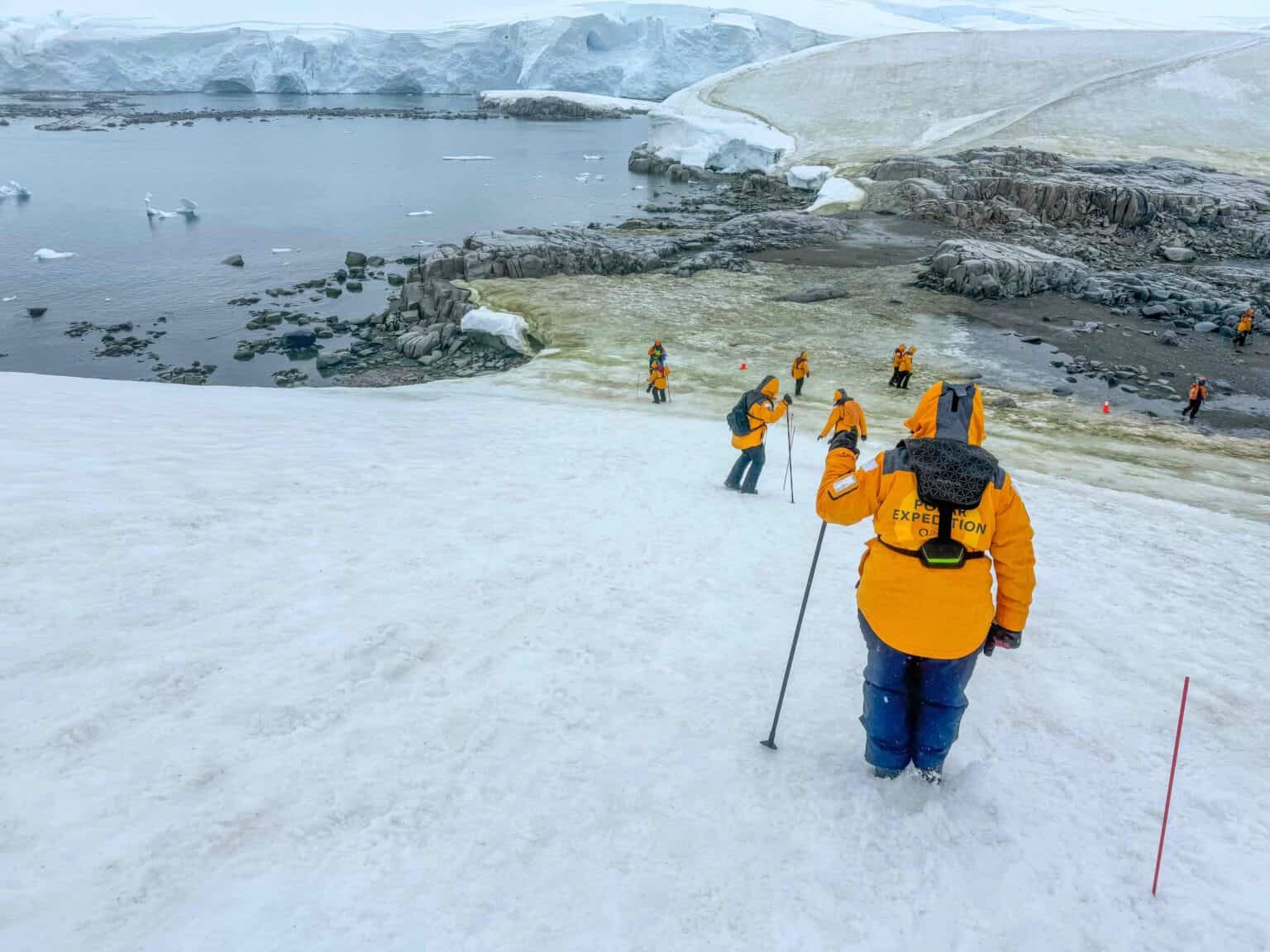
Every excursion off the ship comes in one of two forms: a zodiac cruise around the bay, or a landing on shore. Zodiac cruises were just as incredible as landings. The first time you hear you might spend ninety minutes on land, where you can’t touch anything or sit down, you might think: what am I going to do for ninety minutes? By the next landing, you’re begging for more time. It’s a gift. It’s breathtaking.
It’s also so controlled. There are coned boundaries you have to stay within, and you’ll be called out if you cross a cone, sit down, touch something, or break any rule you were briefed on during the Drake crossing. But it’s controlled in a way that makes you feel lucky to be there, in a setting where you, as a human, are the visitor.
Worth Knowing
Landings are capped at 100 people on shore at once, no matter the ship’s size. But ships carrying more than 500 passengers cannot make landings at all. They sail to Antarctica, but their passengers never actually stand on it.
The Wildlife: More Penguins Than Anyone Warns You About
I could not stop photographing penguins. I ended up with so many penguin photos that my boyfriend eventually asked me to put the camera down. When someone thinks of Antarctica and its wildlife, penguins are usually the first thing that comes to mind, so naturally, that’s what I was most excited to see. Their behavior alone, solo versus in a colony, how they react, or don’t, when something is hunting nearby, was endlessly fascinating.
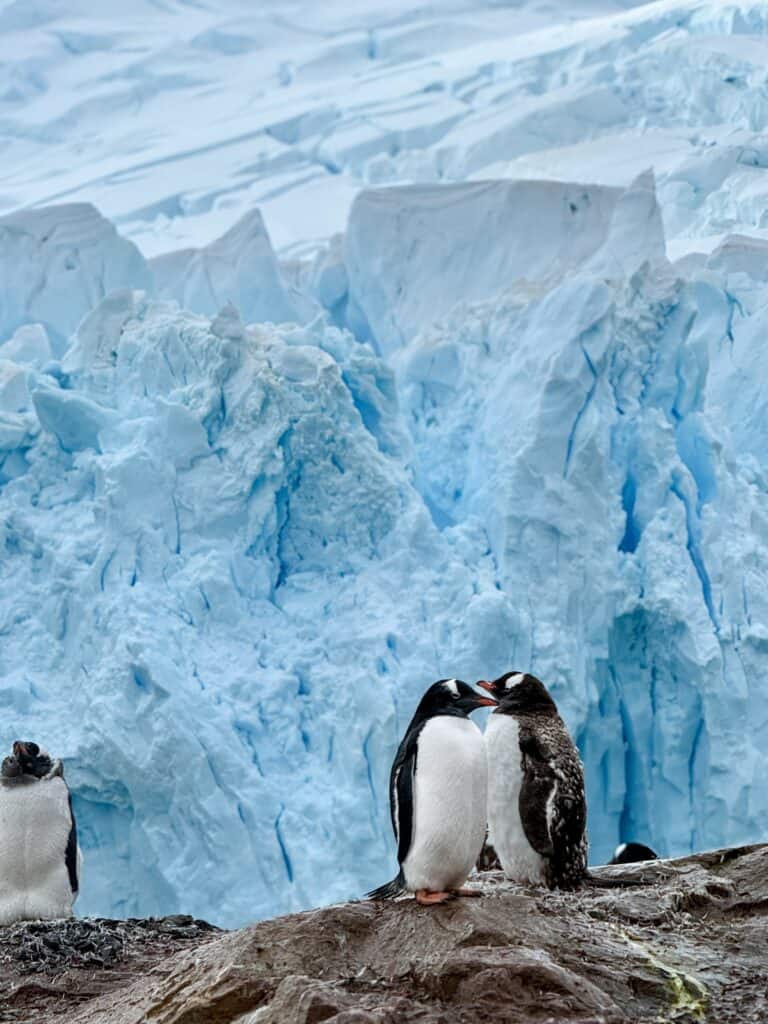
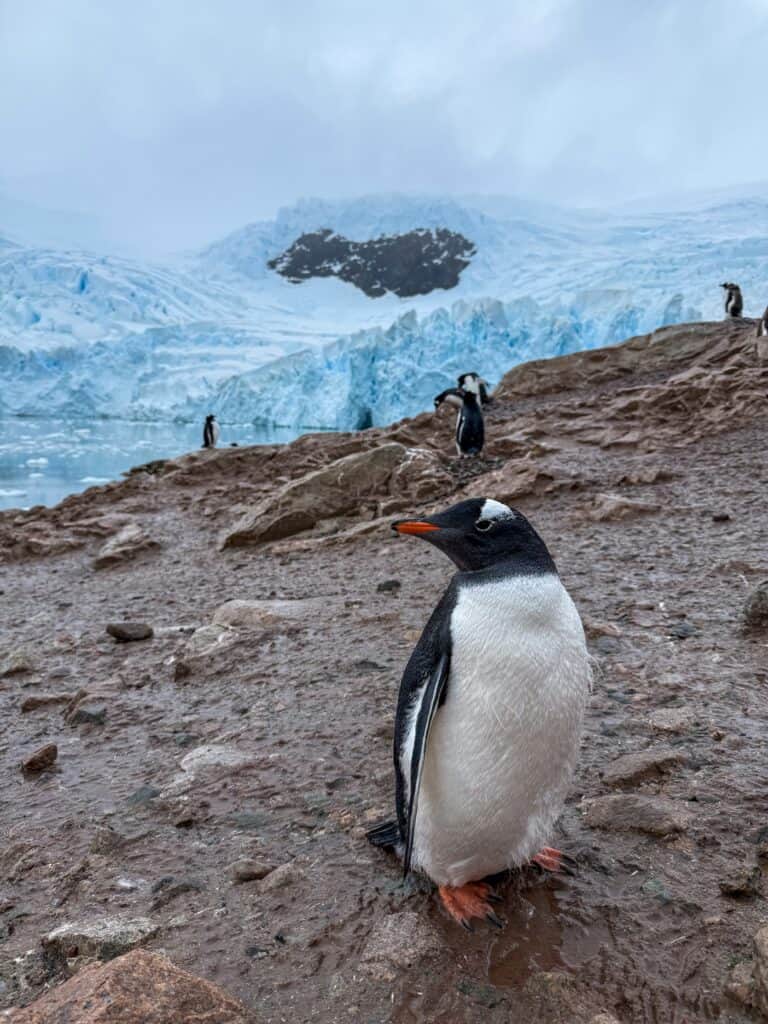
The time of season you visit can change a lot about what you see and how. Our expedition was in early March, and we saw plenty of penguin colonies, mostly molting chicks and adults this late in the season rather than the 5,000-plus crowds from earlier months, but still incredible. We saw hundreds of humpback whales, at least twenty bubble-feeding encounters (something I’d chased on a whale-watching trip in Alaska and never once seen), more breaches than I could count, and all three penguin and seal species still around.
A Typical Day on Board (When the Weather Cooperates)
Drake Days vs. Peninsula Days
You’ll spend about two days crossing the Drake each way, or in our case, a day and a half going down and the normal two coming back. Those days are flexible: lectures and meals, pretty laid back.
Once you arrive in Antarctica, most itineraries run three to five days on the Peninsula. If weather holds and your cruise director and captain know what they’re doing, you’ll get woken up by PA announcements actually broadcast into your room, not just the hallway, you know what I’m talking about if you’ve cruised before, sometimes before 8am.
Mornings and Afternoons
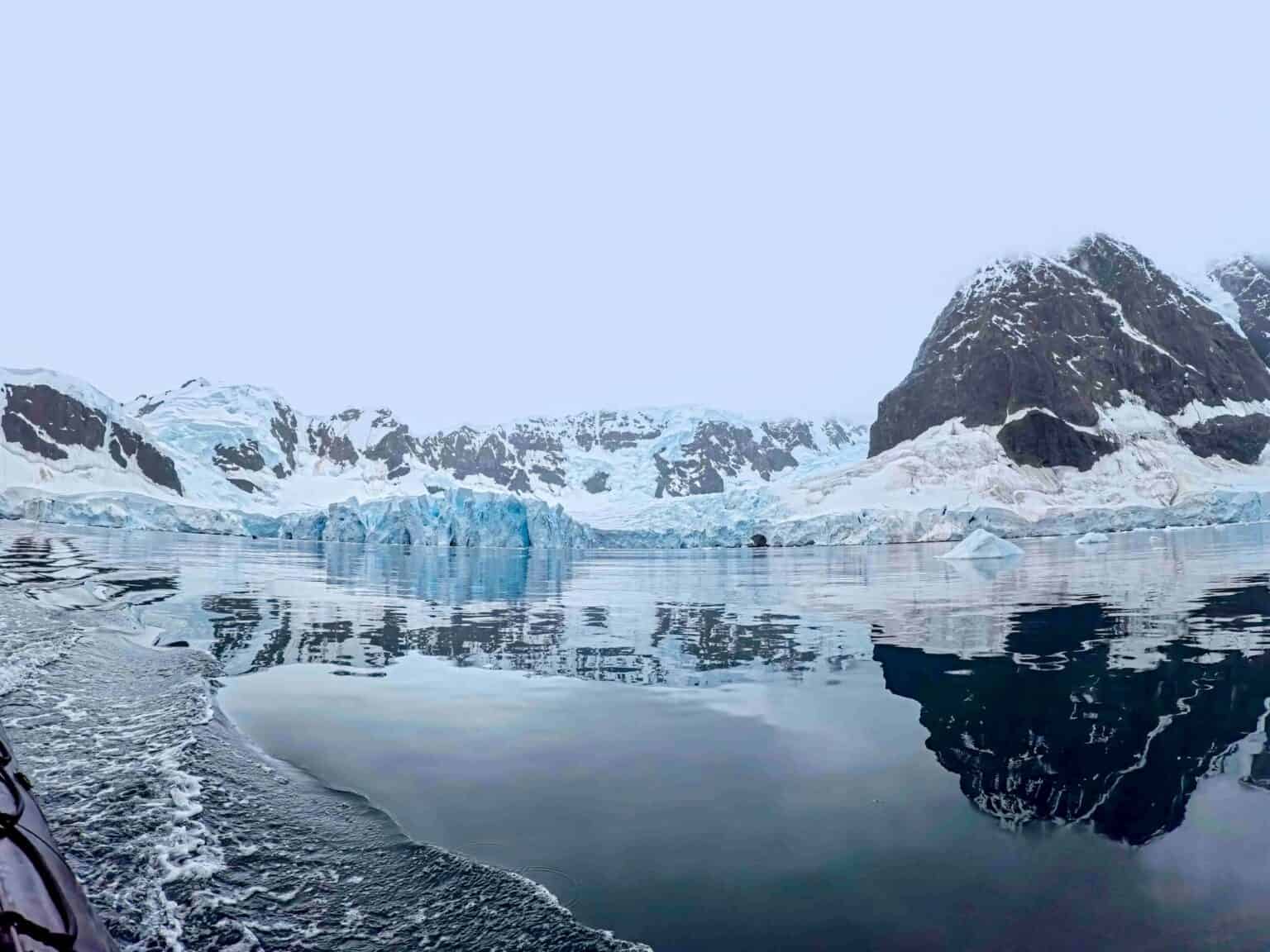
Breakfast first, then your expedition group gets called to the mudroom to gear up. Most ships run four groups. On excursions with a landing, two groups go ashore while the other two run a zodiac cruise of the bay at the same time, then the groups rotate. Zodiacs hold a maximum of ten passengers plus the guide: close enough to watch glaciers calve and spot wildlife without the noise of a crowd. Landings are exactly what they sound like: you step off onto shore and get penguins, birds, and whatever else Antarctica has going on that day. When both are happening, plan for close to three hours off the ship. Zodiac-only excursions run shorter, around ninety minutes.
Back on board for lunch, then a briefing on the afternoon, and if the weather holds, you go back out. Some days you get two excursions. Some days only one. And some days Antarctica just says no and everyone stays on board.
By the time you’re off the ship, if you’ve done the lectures, you’re not just seeing “a penguin.” You’re seeing a Gentoo, or pointing out a leopard seal versus a Weddell seal, and you can’t stop talking about it as you greet the friends you’re already starting to make onboard.
Evenings
Dinner, then a recap of the day with highlights from crew specialists. If there were humpbacks that day, the whale expert comes up and talks about behavior, why they’re in Antarctica, all of it. After that: more lectures, a fun activity, or a nightcap with new friends. Then sleep, and do it all again the next day.
Some of the most tired days I’ve ever had, and somehow also some of the most relaxed.
Meals and Ship Life
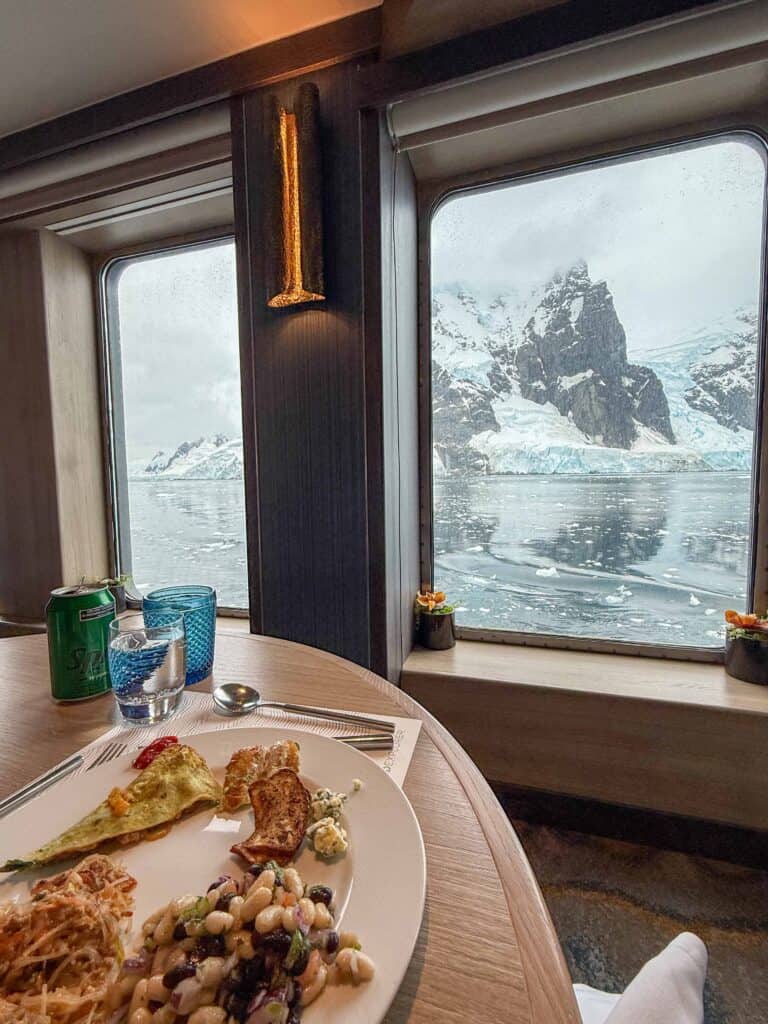
Meals run on a schedule, not a 24/7 buffet: set windows for breakfast, lunch, and dinner, plus an afternoon snack, either mid-afternoon on Drake days or after the afternoon’s excursion once you’re in the Peninsula. Breakfast and lunch are buffet-style, dinner is a sit-down menu with daily specials, and room service is available for an extra cost.
Most trips are all-inclusive, including a basic drink package. The premium drink upgrade isn’t worth it, and that’s already a step up from a typical cruise, where any drink package costs extra.
And the friendships are real. We’ve met up with people from our ship halfway across the world since. By day three or four, you’re sharing dinner tables and comparing notes on the day’s sightings with people who were strangers a few days earlier. It’s not like a normal cruise.
How well any of this runs comes down almost entirely to who’s actually operating the ship.
What Nobody Tells You Before You Go
Was there ever a moment of doubt? Honestly, no. And that’s the strange part. I think it takes a specific kind of person to go to Antarctica: the seventh-continent ego-chasers, or the naturally curious who want to see one of the most untouched places on the planet. The sticker price alone tends to remove the “is it worth it” question, because almost nobody who is willing to splurge on a 10+ day trip like this sits there wondering if it was worth it. The second you pull the trigger, it’s going to be worth it. The only real question is how much.
The Moments I Didn’t Expect
Antarctica also has a way of catching you off guard, even when you’ve braced for the obvious stuff. Two moments did that more than anything else.
- My single-handed interest in wildlife. I became the kind of person who cared about identifying a bird mid-flight, something I’d never once cared about before this trip. Antarctica slows you down, and the crew turns it into something like a scavenger hunt of reporting back what you witnessed each day. That interest in wildlife became learning: remembering that I saw three penguin species, picking up humpback behaviors, getting challenged to ID birds flying overhead. So. Freaking. Cool.
- Nature being nature. Gruesome, sometimes. We watched leopard seals hunt and succeed, twice. Giant petrels picked off one specific penguin out of an entire colony while humans stood a short walk away. Watching nature just do its thing, completely indifferent to how close we were, was unreal.
The Practical Surprises
Don’t expect anything. Antarctica will surprise you and show off for you, even in stormy or overcast weather. I don’t want this to sound like a motivational poster, but “insane” was the only word I had the entire trip, and I’d go back again tomorrow if I could.
One more thing nobody tells you: most of these ships have little to no connectivity. Some offer a bit of Starlink Wi-Fi, but my advice is put your phone on airplane mode and leave it there. Antarctica moves fast, and there is so much you can miss by looking down at a screen instead of up at whatever just surfaced next to your zodiac.
Depending on the ship and itinerary, some landings also come with the option to kayak, paddleboard, or do the polar plunge. We skipped the kayak and paddleboard since they come with an extra cost, but we did the plunge. I’m not going to sugarcoat it. It’s freezing. Literally. But it was also one of the most exhilarating things I did the entire trip. Over 70% of the passengers and crew participated, and if you get the chance, take it.
You’re the Visitor
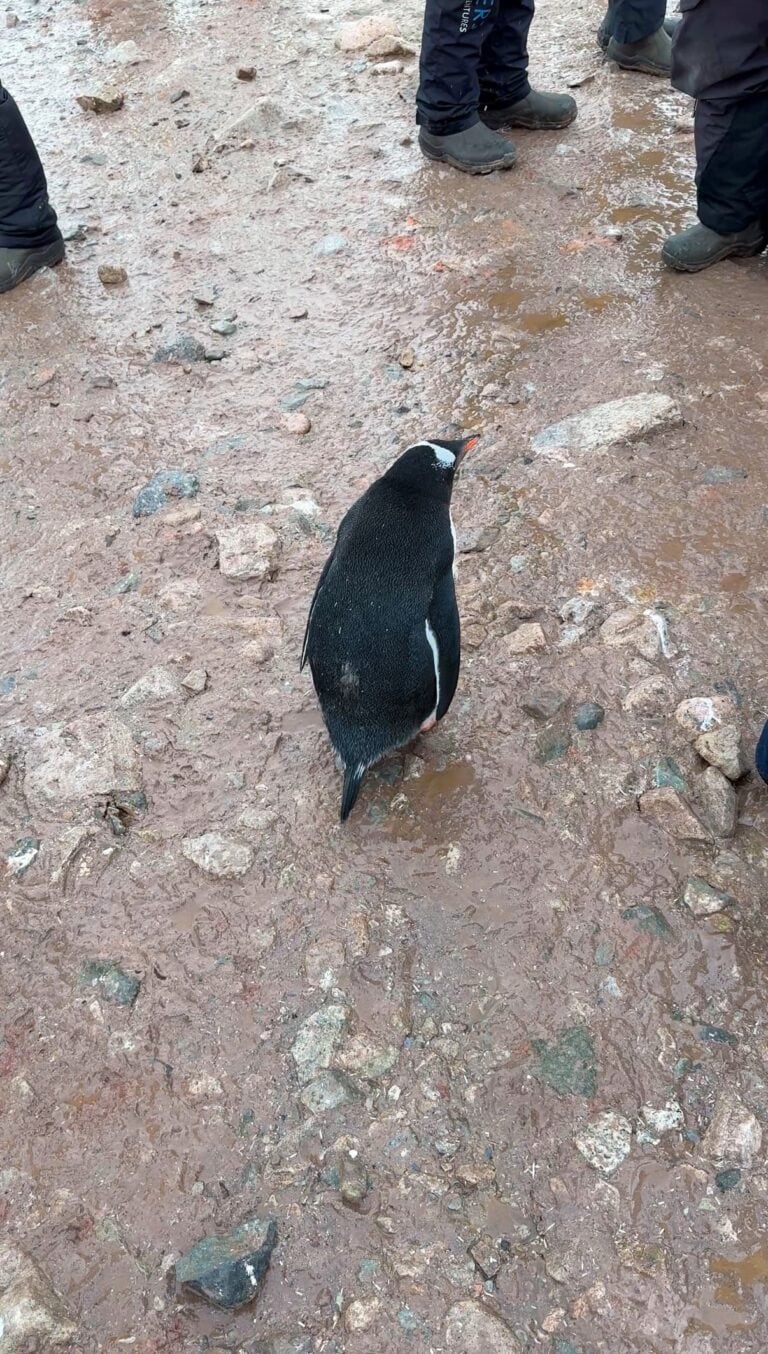
For once, you’re existing in someone else’s habitat, not the other way around. Penguins are unbothered by you; I had them waddling right past my feet, completely unfazed. Whales come close enough to the zodiacs that you could pet them, though you shouldn’t. Close enough that you smell it when they release gas. Not great. Leopard seals play in the zodiac wake so persistently that our zodiac leader had to avoid heading straight back to the ship. Apparently that’s happened before, the seal trying to follow and climb aboard. Not to us, thankfully.
And the sounds. Silence like nowhere else, broken by icebergs calving somewhere in the distance, small chunks of ice crunching against the zodiac, a chorus of “whoa,” “wow,” and “look” from the other nine people in your boat, and gravel crunching under a Gentoo’s feet as it waddles past, completely unaffected by your two feet in its path. And penguin poop. So much penguin poop.
What It Cost, and What It’s Worth
This is personal and unique to each trip, but for ours: we booked a last-minute deal, six weeks before departure, after watching for exactly this kind of deal for three years. Being on a sabbatical gave us the flexibility to book that late. Our 10-day expedition itself, on a luxury, well-experienced operator, came in under $8,000 USD per person. Add realistic flights from the US, and the total lands under $10,000.
If you’re fortunate enough to have the opportunity, go. Everyone should visit Antarctica once, for whatever reason gets you there. But be respectful: Antarctica has serious rules to protect an ecosystem that every human visitor threatens just by being there. Your crew will drill this into you, and it matters that you actually follow it.
So, is Antarctica worth it? All I can say is, it will always be worth it, as long as you go on a small expedition ship. I don’t think it’d be worth it on a “drive-by” with a larger ship that can’t get into the bays or channels, or land passengers at all. That’s what separates an expedition from a cruise. A cruise? Not worth it, to me. An expedition? Ten times out of ten. Even if we hadn’t landed once or done a single zodiac, I’d do the whole thing again for the experience alone.
Planning Your Own Antarctica Expedition
Getting to this point takes more than booking a flight. Luckily, I’ve spelled out the entire end-to-end process to make your trip planning smoother! How to Plan an Antarctica Trip covers how to actually plan and book a trip like this, including the last-minute strategy that made this one possible. What to Wear in Antarctica: The Complete Packing Guide covers what to bring, and what to skip. Why Your Antarctica Operator Determines Everything goes deeper into why the ship and crew matter as much as the destination. And The Drake Passage: Drake Lake, Drake Shake, and Everything in Between covers the crossing itself, lake or shake, in more detail than fits here. If you’re curious like me and maybe intimidated by all the prices or lack thereof on the internet, I also break down our exact cost for our 10-day expedition, down to the dollar.
Frequently Asked Questions
How many people are actually on one of these ships?
Depends on the ship. IAATO caps it at 100 people ashore at any one time regardless of size, and anything over 500 passengers can’t make landings at all. The ships built around zodiac cruises and landings, the kind this whole post is about, usually carry under 200. Ours had roughly 160 passengers and 120 crew. Almost 1:1. It shows.
When is the best time to visit Antarctica?
The season runs November through March, sometimes into April, and what you’ll see depends a lot on timing. You can almost always see icebergs, penguins, and seals!
How cold is it, really?
I live in Washington, D.C., where winters are mild and close to freezing, and Antarctica felt about the same. Layers are your best friend. Windy and around freezing in the Antarctic summer: cold, but not trip-ending cold.
Do you regret going at the end of the season?
Not for a second. We didn’t miss a single thing we’d hoped to see, and if anything, the timing felt close to perfect. The one stretch I’d think twice about is anything past late March — by then, a lot of the wildlife has already moved on for the winter, and the trip shifts toward landscape over animals. That’s straight from our crew, people who’d seen dozens of seasons come and go.
What is the age range Antarctica is for?
Age isn’t a limiting factor. We had an 11 year old on our trip, and a number of passengers in their seventies. The crew is excellent at helping people of all ages and mobility levels, whether that’s extra hands during zodiac boarding or on rougher Drake days, and there are railings throughout the ship for exactly those days. The real requirement is being able to walk reasonably well, especially once you’re in three or four layers of gear. Beyond that, Antarctica doesn’t care how old you are!
Is an Antarctica expedition worth the cost?
Without a doubt! The price tag alone tends to filter out anyone who’d come back unimpressed, but even knowing that going in, Antarctica still outpaces what you expect. Every part of this post, from the cost to the cold to the wildlife at your feet, undersells it slightly until you’re actually standing there. I’m a little jealous of the crew who get to do this multiple times a season. That’s not a bad way to spend a career!
What Stays with You
Antarctica sits with you, even years later. Ask anyone who’s actually been to Antarctica where the best place they’ve ever traveled was, and plenty land right back here, maybe because nothing else compares, maybe because it was their seventh continent. If you take one thing from this post, though, leave your expectations at the door: every operator, every crew, every season is different. Whatever version of Antarctica you get is the one you’ll spend years trying to get back to.
Pin For Later!