Your Antarctica Operator: The Decision Nobody Talks About
Every conversation about Antarctica eventually gets to price, packing, and the Drake Passage. Who you sail with gets mentioned in passing, treated the same way departure ports are: as logistics rather than a decision. That’s the wrong frame. Your Antarctica expedition is only as good as the operator running it, and almost nobody says that clearly when you’re still planning. Knowing how to choose an Antarctica cruise operator correctly shapes every single day on the ice, in ways that only show up in real accounts, not in marketing materials.
How I Narrowed It Down
Choosing an Antarctica expedition operator is not quite like choosing any other cruise company. The marketing is polished across the board with every ship and its itinerary promising unforgettable moments that make “the trip of a lifetime,” pretty cliche, I know. What none of them advertise in bold letters are the factors that separate one experience from another: how long the company has been operating specifically in Antarctica, whether their ships are built for polar ice or repositioned from somewhere tropical like the Mediterranean in October, and the depth of experience of the people running the expedition off the ship.
My three non-negotiables were set early. If I was going to spend close to $10,000 per person, I wanted some level of luxury, I wanted to step foot on land as much as possible, and I wanted to go with an operator that had been doing this for years. I didn’t want one that had only entered the Antarctic space recently due to the rise in tourist interest.
That ruled out a few categories fast. Celebrity Cruises and ships of that size offer cruise-only sailings in Antarctica: you observe from the deck, beautifully, but you stay on the ship. The IAATO, the organization governing Antarctic tourism, does not allow ships with over 500 passengers to land. Ships between 200 and 499 passengers can land, but groups cycle on and off in shifts and ships don’t always fit into every reserved bay on a given day. The sweet spot is under 200 passengers, and once I understood that, my options narrowed considerably.
What Your Operator Controls That Nobody Advertises
Here is the piece that never makes it into the brochure. All of Antarctica runs on a reservation system that requires every ship to book its landing sites for the entire season, and that system runs on a first-come, first-served basis, meaning months in advance, when the dynamic system opens bookings for the season, expedition leaders start reserving their itineraries. Antarctic weather changes on a daily basis, sometimes in the span of an hour. Swapping a planned location means either finding an open site, which is unlikely, or finding another ship willing to trade. That negotiation comes down entirely to your expedition leader and captain, their relationships, and how many consecutive seasons they’ve each spent doing this in this specific region. A credible operator is the one that can attract people with those relationships. A newer one in the Antarctic space simply doesn’t have them yet.
Our expedition leader has been working in Antarctica since 1995. He has run expeditions alongside our captain for more than three consecutive seasons, and the captain has been with that same ship since its inauguration in 2019. That combination earned us an extra landing when we arrived at the Peninsula ahead of schedule. It earned us an itinerary swap on a bad weather day, trading slots with a ship whose flight couldn’t land and whose passengers never made it on board. It got us into the Lemaire Channel on a day when less experienced captains would have avoided it entirely. On our Drake crossing home, their forecasting traded 15-meter swells for 6 to 8.
Out of four planned days of expedition time on the Peninsula, we hit both morning and afternoon excursions every single day, plus an extra afternoon landing we hadn’t planned for. We stepped foot on the Antarctic mainland twice. Most people planning a first expedition don’t realize that isn’t guaranteed, and it’s one of the things I cover in what to actually expect from an Antarctica expedition. Most landings happen on the islands along the Peninsula, not the mainland itself. We got two. Is some of that luck? Of course. But a lot of it was the team running the ship.
The People You Didn’t Expect to Care About
I expected the onboard lectures to be entertaining and informational, but at the end of the day, largely forgettable after returning home, and maybe that’s in part due to my bad memory. But that’s not what happened, and I was entirely wrong.
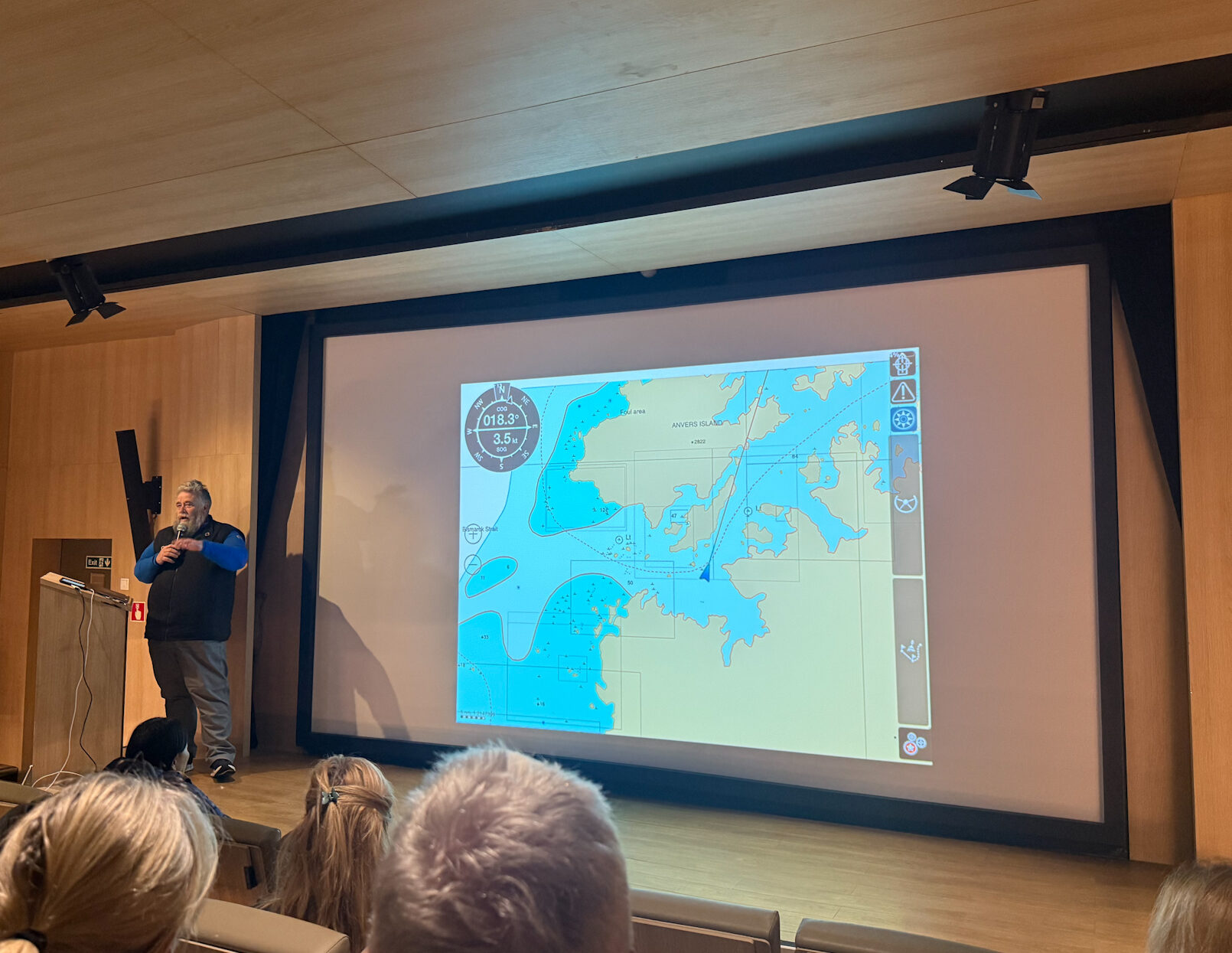
Our team included a whale biologist who knew individual humpbacks by their flukes and talked about feeding behavior the way someone talks about a subject they’ve spent their life on. He’d use his height as a reference point to help you understand how large some of these whales are. A glaciologist with years of research on the Antarctic ice sheet. A historian specializing in Antarctic exploration. A bird specialist who could identify a petrel at distance in a way that made everyone around suddenly care about petrels. Most of them were former researchers who had spent years or decades working in Antarctica before moving into expedition tourism. The newest member of the team had joined in 2019. The longest-tenured had more than 20 years on the ice.
It is one of those things you walk into thinking it will be a small, pleasant bonus, and find yourself looking forward to every day. I’m still thinking about some of those presentations months later.
The small-ship dynamic makes all of it more personal. With a 199-passenger capacity and close to half of that being crew, you end up with a level of familiarity that doesn’t happen on larger vessels. The maitre d’ remembered preferences by the second day. The bartenders had your drink ready when they saw your face. Some even remembered your name. That experience is a direct function of which operator is running the ship and how long they’ve been building that team.
Antarctica Expedition Ships: The Three Expedition Classes
There are more ships operating in Antarctica now than there were five years ago, and the range has widened at both ends. Within the under-200 passenger range, there are essentially three classes of expedition ship, and the differences are real enough to matter before you start comparing prices.
Tier 1: Classic Expeditions
Ships in this category are stripped-down vessels built entirely for the expedition, often converted research or naval ships. The off-ship expedition experience is front and center. The onboard experience is minimal and purely functional. Operators like Oceanwide Expeditions (ships like the MV Plancius or MV Hondius) sits here.
Tier 2: Premium/Luxury Expeditions
This tier hosts purpose-built modern ships that maintain a strong expedition focus while adding upgraded cabins, dining, and amenities. Quark Expeditions (Ultramarine, Ocean Explorer, World Explorer), Lindblad/National Geographic (Endurance, Resolution), HX Expeditions (Ronald Amundsen, Fridtjof Nansen), and Aurora (Greg Mortimer, Sylvia Earle) all live in this tier.
Tier 3: Ultra-Luxury Expeditions
At this level, the ship is as much the destination as Antarctica. Seabourn (Venture, Pursuit) and Silversea (Endeavour, Cloud) offer Michelin-caliber dining, full spas, and extended wine lists. The expedition focus exists, but the balance tips considerably toward the onboard experience.
How I Chose My Operator
I originally thought I sat in Tier 3, provided I could land a last-minute deal to soften the price (and if that’s your approach, my booking timing and strategy post walks through exactly how the timing works). Nothing ever materialized on that front. Having now been, I’m extremely glad it didn’t.
My original shortlist was National Geographic-Lindblad Expeditions, Seabourn, Atlas Ocean Voyages, and Quark Expeditions. Albatros Expeditions entered the picture later. They started showing up consistently in last-minute deal alerts over three years, and at the right price point, they’re hard to dismiss.
Lindblad was the aspiration: the Endurance and Resolution are purpose-built for polar water, and the National Geographic partnership brings a naturalist depth that sets them apart. The two problems were budget and availability. Over three years of monitoring last-minute deals, I never once saw an offering on a Lindblad sailing. Make of that what you will. My read is they fill at full price early enough that discounting simply isn’t necessary. If booking early is your approach, every account I’ve heard from people who’ve sailed with them is strong.
Seabourn and operators like it were never really in the running for me. Their ships are built for polar ice, but the company is relatively new in Antarctic operations, and the balance between expedition focus and onboard luxury tips further toward the latter than I wanted.
That left Atlas Ocean Voyages (high Tier 2 or lower Tier 3, that Seabourn feel at a more accessible price, but fewer years spent specifically in Antarctica), Quark (solidly Tier 2, the best balance of polar expertise and onboard quality at what they charge with the polar credibility), and Albatros (a step below Quark in Antarctic-specific experience, but decent ships and the easiest of the three to find a deal on; they showed up consistently over three years).
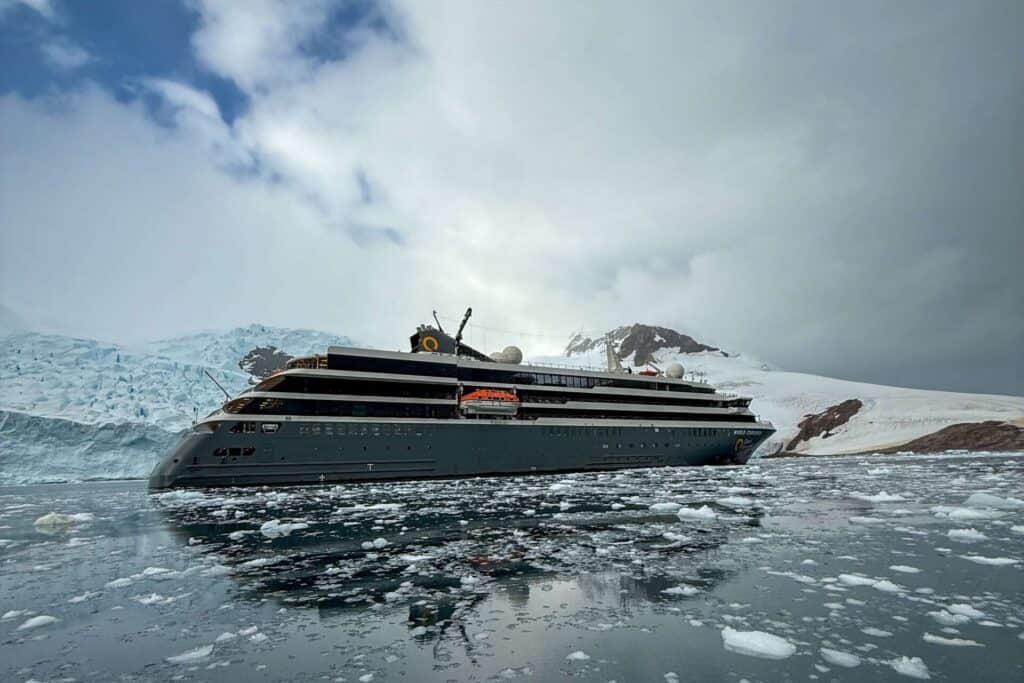
In November 2025, a perfect Atlas deal arrived and expired before we could lock it in. I was disappointed for about 48 hours. Then I started questioning why I’d been chasing the marginal upgrade in decor and dining when what I cared most about was expedition time off the ship. I shifted focus to Quark. In February, the right deal came in on the World Explorer, and we booked it at 3am out of excitement. We locked in under $8,000 USD per person, booked six weeks out. I would make the same call again. Note: the World Explorer is rebranding to the Star Explorer under new ownership beginning late 2026 and will no longer operate as a polar vessel, worth knowing if you’re researching it now.
Who Should Book Which Tier
What tier you should book depends on what you care about most, which is worth being honest with yourself about before you start comparing ship specs.
A Few Questions to Ask Yourself
Before you commit to any expedition,
- If you’ve been on a cruise before, how much of that experience (the shows, the 24/7 buffet, the premium restaurants) actually mattered once you were somewhere extraordinary?
- Once you get to the Peninsula, do you need to step foot off the ship, or would you be satisfied observing from the deck?
- Are you okay with a smaller vessel and fewer onboard activities in exchange for more time on land?
- What are your non-negotiables, and what can you let go of?
The answers make the tier decision almost automatic.
Ship Size
Under 200 passengers if maximizing time and access off the ship is the priority. Between 200 and 499 if you want landings but are okay with more structured rotation. Over 500 if Antarctica as scenery, observed from the deck, is the experience you’re after. All three are valid. They’re different trips.
Luxury Level
Within the under-200 range:
- Classic Expedition if the onboard experience is secondary to the off-ship time and you want to keep cost down.
- Premium/Luxury Expedition if you want the expedition focus without the stripped-down onboard reality (upgraded cabins, real dining, modern amenities alongside serious polar focus). This is the tier worth seeking out for most people, and the most important variable within it isn’t the ship itself but how many consecutive Antarctic seasons the operator behind it has run.
- Ultra-Luxury if the onboard experience matters as much to you as the ice itself.
I learned most of that the hard way. For a long time I was stuck measuring Atlas against Quark on the wrong things. How modern the ships were, the food, things that mattered considerably less once I was actually looking at penguins. What I actually cared about was expedition time off the ship. Once I reframed it that way, the decision got a lot simpler. If you want a fuller picture before you commit, my post on what the expedition itself is like gets into what the days on the ice look like.
Frequently Asked Questions
How to Choose an Antarctica Cruise Operator
Knowing how to choose an Antarctica cruise starts with ship size. Under 200 passengers if you want maximum expedition access and time on land; between 200 and 499 if you’re okay with more structured rotation; over 500 if a cruise-only sailing is your preference. Then narrow by tier based on how much the onboard experience matters to you relative to the expedition experience. Finally, and this is the step most people skip, look at how long the operator and their expedition leaders have been running expeditions in Antarctica. That last piece separates a great operator from an average one. On a trip at this price point, getting it wrong is a costly mistake either way.
Does it matter how long the operator has been running Antarctica expeditions?
Considerably. Antarctica’s site reservation system runs on priority, and an expedition leader’s ability to call in real-time swaps depends on relationships built over years in this specific ecosystem. A company new to Antarctic operations doesn’t have those relationships yet, regardless of what their ships look like. It shows up in how a trip goes when conditions aren’t cooperative, which in Antarctica is most of the time.
What happens when the operator changes the itinerary?
Expect it. Every single one of our daily itineraries changed in some way while we were on the Peninsula. Antarctica operates on weather, ice, and wildlife, not brochure schedules, and not knowing exactly how each day will unfold is part of what makes it extraordinary. The variable worth caring about is whether your expedition leader has the experience and the credibility to change things in your favor.
Is the more expensive Antarctica operator always worth it?
Not always. Moving from Tier 1 to Tier 2 makes a real difference. You will gain modern onboard comfort without losing the expedition focus. Moving from Tier 2 to Tier 3 is more marginal for most people because the upgrade is primarily onboard. Within the same tier, the operator with more Antarctic-specific experience is often worth the premium, though not always the most expensive name in the tier. There are operators in the same tier with equally strong expedition itineraries at a meaningfully lower cost.
What Stays With You
What Antarctica leaves with you is hard to explain until you’ve been. The ice, the silence, the animals all land differently, and none of it arrives in a predictable order. But which version of it you carry home depends on how close you actually got to it, and that is shaped almost entirely by the people running your expedition. Without the right operator, I wouldn’t have reached the Lemaire Channel in bad weather, stepped foot on the mainland twice, or ended every expedition day with the sense that someone was doing everything in their power to make it extraordinary. Choose for the expedition. What you remember won’t be the ship.
Pin For Later!