The Drake Passage: Drake Lake, Drake Shake, and Everything in Between
Every Antarctica expedition briefing frames the Drake Passage the same way: Drake Lake vs Drake Shake. Calm and uneventful, or spectacularly chaotic but no in-between. What they don’t tell you is that most crossings land somewhere neither of those descriptions quite covers. That unnamed middle ground is what you need to prepare for.
Drake Lake vs Drake Shake: What the Terms Mean
The labels have become shorthand for two extremes. A Drake Lake describes swells around three meters (roughly 10 feet), where the horizon holds steady and the ship moves with a gentle, rhythmic roll. A Drake Shake is significantly worse. During a bad storm, swells can hit 10 to 15 meters, or 30 to 45 feet, and the crossing earns every bit of its reputation.
What those two labels leave out is the middle. 6-to-8-meter swells are, according to our captain, a fairly common crossing scenario. It’s not technically a Lake, not a full Shake, and whether you’d call it one or the other depends almost entirely on how your body responds. Someone who doesn’t get seasick can spend those days on the observation deck watching the swells and call it manageable. Someone who does get seasick will call it a Shake without hesitation. Both of them are right.
So here’s the answer to the question most people are actually asking: you won’t know which crossing you’re getting until you’re in it. And even then, you might disagree with the person in the cabin next to you.
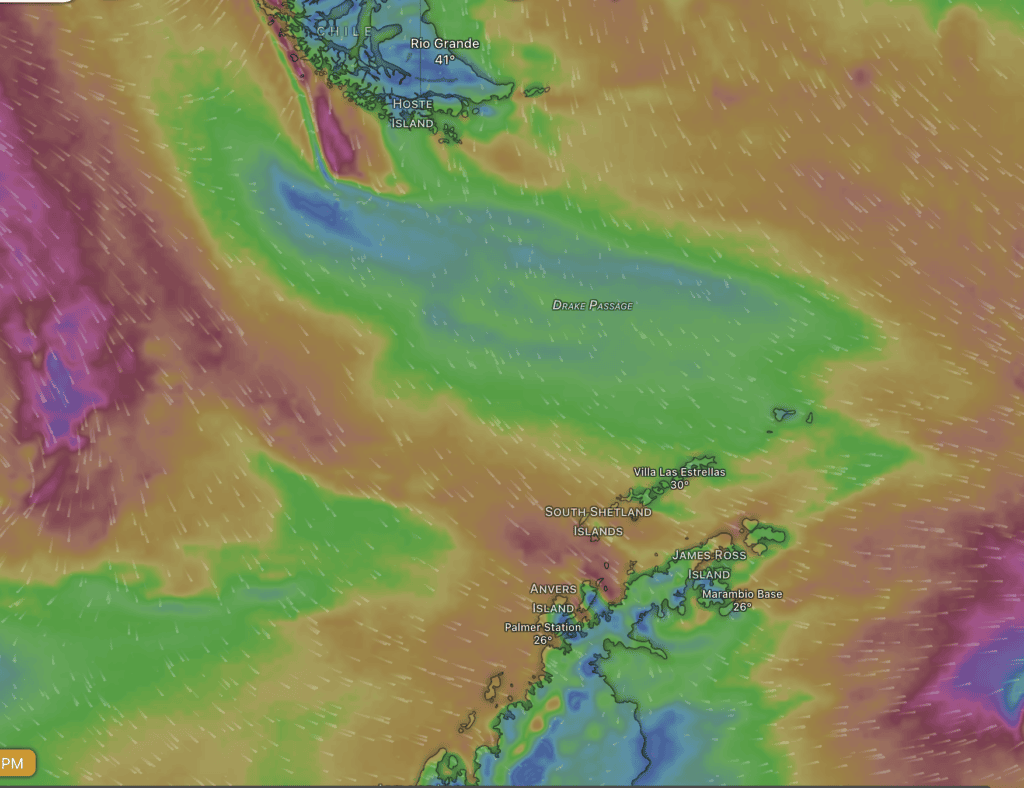
The crew forecasts as early as five days before departure, but they won’t commit until you’ve set sail. On our crossing south, the forecast looked favorable early and the crew confirmed a Lake once we’d entered the Beagle Channel for our first briefing. On the return, they waited until the night before, and overnight the storm tracking into the Drake got worse. By the second day heading back, the captain had altered course to avoid the worst of it.
Whatever the conditions, the days settle into their own rhythm. Some lectures are mandatory on the way down to the Peninsula, others are optional depending on what you want to know before you get there. Meals run on a set schedule, and in between, you’ll spend a lot of time in the observation lounge watching the horizon. It’s intentionally slow, and worth letting it be slow rather than fighting it.
Drake Lake: What the Calm Crossing Feels Like
The clearest signal that you’ve got a true Drake Lake is having the ability to walk around the ship freely without clenching the handrails that line the ship’s walls. Ours was calm enough that the pool and hot tubs remained open, which the crew told us was nearly unheard of on a Drake crossing. We arrived at the Peninsula half a day early and picked up an extra landing at Deception Island.
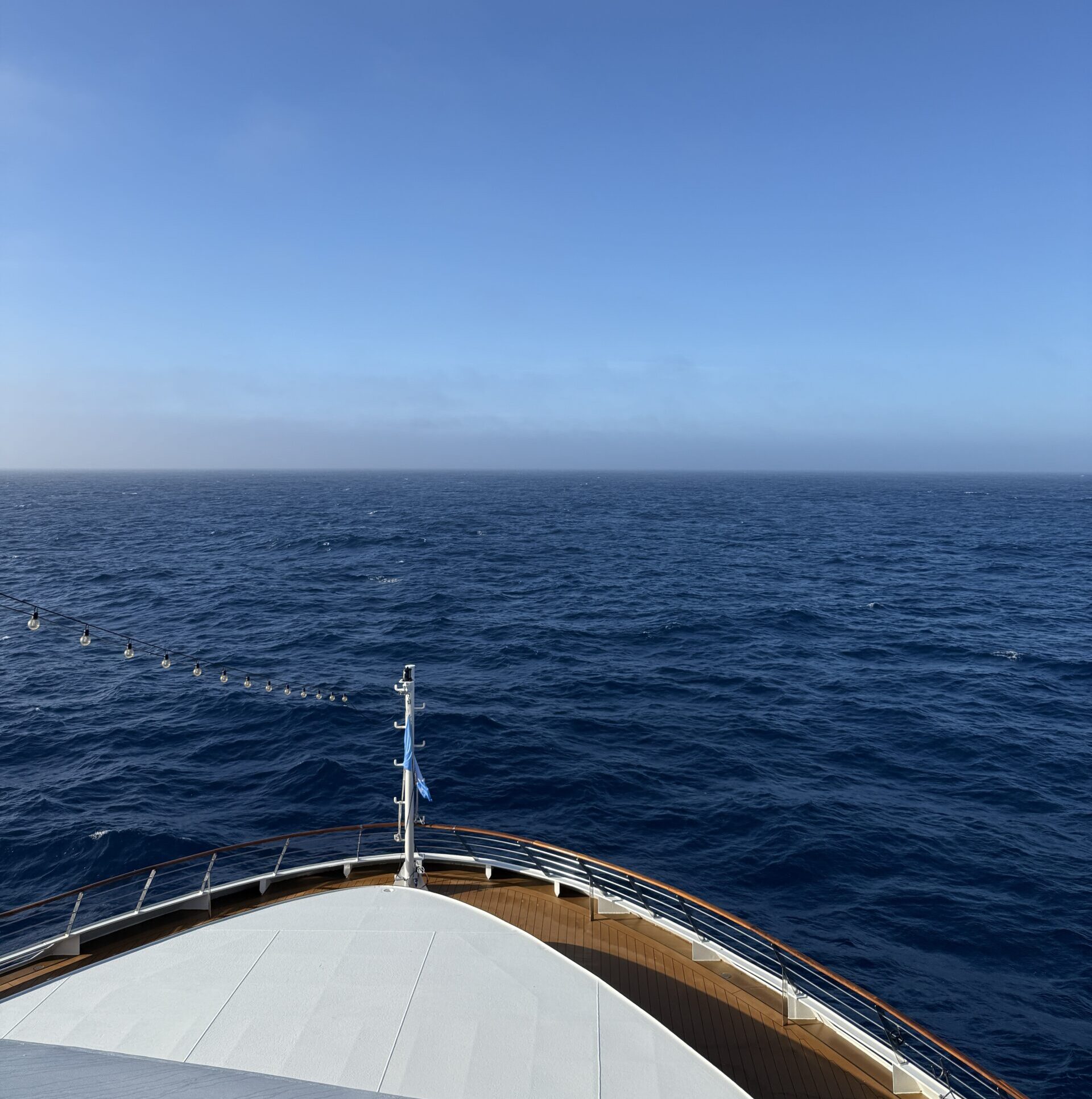
If you’ve sailed the Caribbean or Mediterranean before, a Drake Lake feels familiar. There’s still movement as you’re in the open Southern Ocean, but it’s the low-level sway you stop registering after an hour or two. Lectures run on schedule, the dining room fills up, and the observation deck is crowded. It was entirely as I’d expected, even accounting for how different our expedition ship was in scale compared to a typical cruise ship.
What makes it different is the energy. Everyone onboard is heading south for the same reason, and you can feel it across the ship. When the captain confirmed a Drake Lake, the room let out something close to a collective exhale during our first briefing. 100+ people, all feeling the exact same mix of excitement and relief at the same time, is something you don’t get on any other kind of trip.
Drake Shake: What the Rough Crossing Feels Like
Our return to Ushuaia was what I’d call the unnamed middle. 6-to-8-meter swells that may not classify as a true Shake, but felt like one to me. The handrails stopped being background and became necessary. Moving throughout the ship required paying attention to the roll.
One thing I didn’t anticipate: ships selectively disable certain stabilizers in heavier swells to prevent mechanical failure. We learned this on a bridge tour that happened to fall during our rougher return crossing. The ship retains stabilization, just not all of it, which means you feel more of the sea’s movement than you might expect going in. Hearing “6-meter swells” is one thing. Feeling them is another.
The social dynamic shifts noticeably depending on which direction you’re crossing. On the way south, rough conditions would carry a different weight. The excitement of what’s ahead provides some counterbalance to the nerves that come with the swells. On the return, coming off everything Antarctica delivered, morale is quieter. There are no mandatory briefings pulling people out of their cabins, and anyone who isn’t feeling well simply stays put. The ship gets noticeably emptier in the common areas.
The direction of your rough crossing matters more than you’d think. I won’t lie. I did not like feeling out of it on our return crossing. But I don’t regret going through it, not for a second. The Shake is part of the expedition in a way the Lake isn’t, almost like a rite of passage. It’s one of those things that’s harder to explain than to just go through. But one thing is for sure: you will survive it.
Drake Passage Seasickness: What to Take and What to Skip
Full transparency: I’m someone who takes Dramamine before sitting in the front seat of a car. The Drake was not something I was leaving to chance.
I’m not a doctor, and you should consult yours before taking anything, especially if motion sickness medication is new to you. That said, here’s what I found actually worked, and what I’m less convinced by.
One thing nobody mentions about food: bland, starchy food is essential on rough crossing days if you’re prone to an upset stomach, and the ship’s buffet doesn’t necessarily lean in that direction. I brought water crackers on board specifically for this, and I was grateful I had them. Electrolyte packets are worth packing too, especially if seasickness has you skipping meals. Plan ahead.

Transderm Scopolamine Patch (Prescription Required)
Worn behind the ear, each patch lasts three days. This requires a doctor’s appointment before your trip as it’s not sold over the counter. I put my first patch on the night before sailing to give my body time to adjust, rather than starting it the morning of crossing. My boyfriend, who has no seasickness history, wore one only on crossing days and described feeling completely normal through our rougher return. I experienced mild side effects (some dizziness, some nausea) that made it impossible to tell whether the patch was helping or contributing. I’m still convinced it helped though I’ll never know for sure.
Dramamine or Bonine (Over the Counter)
What most people default to, and what ships provide on board for free. Effective for many, and worth having regardless of what else you bring.
Sea-Bands
Acupressure wristbands. I’ve used them before on other cruises and personally find them closer to placebo than treatment once swells get meaningful. Other people swear by them. Low commitment, worth throwing in your bag.
Whatever you choose, the timing matters more than the method. Start any medication before you feel sick, not after. Our ship’s doctor ran a dedicated seasickness lecture during the crossing, covering what to take, when to take it, and who should take what. It was more useful than I expected. But if you know you’re prone, don’t rely on what’s on board being the right thing for you. Check out the full guide on what to bring before you go.
Drake Passage Wildlife: When to Get on Deck
The Drake isn’t just two days of waiting. On our calm crossing south, petrels and albatrosses appeared almost as soon as we left the Beagle Channel. These are birds specific to the Southern Ocean, capable of flying the open Drake in ways most species can’t manage. One of the expedition lectures covered how they use the ship’s disruption of wind patterns to glide alongside for hours, barely flapping. Watching it happen while someone explained it right there on deck ended up being one of the best parts of the whole crossing, and it was entirely unexpected.
Wildlife follows calm conditions and hugs the ship. On our rougher return crossing, there was nothing visible from the ship’s windows. When the seas are rough, the decks are closed and you’re advised not to go out onto your cabin balcony either. On the Lake crossing south, we had birds for hours. Whales are possible, typically spotted at a distance and dependent on the time of season. We didn’t see any on ours, but they’re out there.
Your Questions About the Drake Passage, Answered
How long does it take to cross the Drake Passage?
Two days each way, though calm conditions can shave off a few hours and rough weather can add them. Don’t expect the exact timing to be predictable.
Can you skip the Drake Passage and fly to Antarctica instead?
Fly/cruise itineraries exist, typically departing from Punta Arenas rather than Ushuaia, and cost more. I break down the full trade-offs in my guide to planning an Antarctica trip. The catch: flying means betting more heavily on the weather than sailing does. On our expedition, a ship of flying passengers got delayed a full day by high winds and lost a landing to us because of it. That delay benefited us and cost them a full landing in Antarctica. I’d choose sailing both ways, every time.
Is the Drake Passage dangerous?
Less than its reputation suggests. Modern expedition ships are polar vessels, built with reinforced hulls, stabilizers, and navigation systems for exactly this crossing, and if conditions turn truly dangerous, they reroute or delay rather than push through, as ours did on the return. The discomfort is real. The danger, on a properly equipped ship, is managed.
What medications work best for seasickness on the Drake?
This is personal. Transderm Scopolamine is the strongest option for frequent motion sickness sufferers and requires a prescription. Dramamine and Bonine work for many people and are available on board for free. Whatever you choose, start before you feel sick, prevention beats treatment here, and test anything new at home first.
What is the best time of year to cross?
There’s no storm-free season in the Drake. Expedition season runs October through April, when conditions tend calmer, but summer doesn’t guarantee smooth seas. A rough crossing in November is just as possible as one in March.
What happens if conditions are too rough?
Captains delay departure, reroute, or both, exactly what happened on our return when an overnight storm forced a course change. Ships won’t cross in conditions they can’t manage safely. What they will cross in is uncomfortable, or, if you’re the type who enjoys chaos, kind of fun.
What animals can you see in the Drake Passage?
Petrels, albatrosses, and prions are the most consistent sightings on calm crossings, which are seabirds that follow the ship using its wind disruption to their advantage. Whales are possible but less common. Rough conditions make wildlife watching difficult, so get on deck when you can on calm days.
Before You Go
Crossing the Drake is worth it: Drake Lake, Drake Shake, or that unnamed middle that may or may not make for a great story later but tests you just the same. Whether you’re someone who doesn’t give the seasickness question a second thought or someone who researched every corner of the internet before packing crackers and electrolytes, the preparation looks the same. Bring what you know works and start it before you need it. And be sure to test anything new at home before you’re two days into the Southern Ocean.
None of it is in your hands, and it’s part of what makes an Antarctic expedition so unique. Not the conditions the captain can’t promise. Not the swell height you won’t know until you’re in it. Not the mood of a hundred people crossing that same water with the same mix of nerves and excitement. If you’re wondering what comes after the crossing, or how the ship you choose shapes the whole experience, or what the whole trip actually cost us, check out my other posts on Antarctica!
Pin For Later!